Subscribe

Get updates by:
RSS
RSS
Twitter
Twitter
Email
Email
Online College Search

Pay for College

Find Student Loans
Student Parent

Loan Amount:
$

Graduation:

Where to get eTextbooks

PDF Print E-mail

Like it or not, eTextbooks will slowly replace traditional textbooks and become the way of the future. While digital textbook sales currently only account for a very small percentage of the textbook market, they are projected to reach 18.8% of the market by 2014.

As newer devices like the iPad are introduced, students are seeing they can read books in digital form all while saving money and reducing the weight of their book bags. But as it stands now, when it comes to studying, e-readers can’t match the functionality of traditional textbooks. E-readers may be fine for reading, but textbooks are seldom read like novels, which is why most students still prefer traditional textbooks.

If you do choose to get your textbooks in digital form, it is highly recommended that you have some type of portable device like a laptop, iPad or Kindle DX so you can easily carry and view your eTextbooks on a readable device. Sometimes you can access textbook material from an iPhone, but this is not the ideal device to use when studying (though it comes in handy when trying to look up something real quick). You could use a desktop computer, but you may not be able to access your textbook (in some cases) when you are in class or in a study group, which could be limiting. To get around this, some students print out copies of certain parts of their textbook when needed in paper form.

The biggest complaint about eTextbooks seems to be that you can’t take notes as easily as in a traditional textbook. However, there are a few e-readers available that will allow you to do highlighting and jot down notes next to a paragraph and you can easily search for a specific word, phrase or topic within the textbook. Of course, as mentioned before, with eTextbooks you always have the option of printing out your required reading and making notes next to passages as you normally would.

While more college bookstores are beginning to offer eTextbooks as a purchase option, you can still find these books for much cheaper online, as college bookstores are known to have quite the markup on prices.

Along with buying and renting, downloading textbooks is a third option for getting the textbooks you need, and clearly the fastest way to get your books as they can be downloaded instantly upon purchase online. Consider the following companies when looking to get your textbooks in digital form.


CourseSmart


CourseSmart

CourseSmart has really benefited from the growing popularity of eTextbooks. They reported a 400 percent increase in sales in 2009 from the year before.

CourseSmart bills itself as the number one place for eTextbooks as it carries one of the largest collections of eTextbooks. They also have a mobile app that lets you browse your material from your iPhone or iPad. CourseSmart claims you can save up to 60% off the price of printed textbooks when you purchase textbooks in digital form.

When purchasing eTextbooks at CourseSmart, simply find your book and select between the "online" or "downloadable" format and complete your purchase. Purchased online eTextbooks can be accessed instantly and read right away. If you purchase downloadable textbooks, you will be required to install a software application on your computer to allow viewing. You must choose if you'd like to download the book and view it on one computer, or access it online from any computer, you can't choose both. Purchasers of the eTextbook don't get to keep the book permanently because the downloaded files have digital expiration codes and expire after about 180 days.


CengageBrain


Cengage

At CengageBrain you can buy, rent or download your textbooks. Whether you need the whole book or just a few chapters, you can get your textbooks in any form you want. With 15,000 new print textbooks, textbook rentals, eBooks, single eChapters, and print, digital, and audio study tools, you should be able to pick and choose just what you need. The eChapters option would be a good choice for saving money in those classes that only cover a few chapters of the book. Check your syllabus to see how much of the textbook your teacher plans on covering.

PDF textbooks from CengageBrain are called sPDFs (basically a secure PDF file). An sPDF is the same as a standard PDF file with the addition of DRM (digital rights management) software to protect the copyrighted content. This technology prevents illegal distribution of the textbook over the Web. To view your eTextbooks on your computer, you must download their viewer, which provides the DRM software for eTextbooks purchased at CengageBrain.com. This software is required to access your electronic content. Because of this strict DRM technology, you are granted two licenses to your content, which means you can only view your textbook on two different computers at a time. Thus it may become a problem for those using computers in a computer lab.


CafeScribe


CafeScribe

CafeScribe sells eTextbooks on its online store and also at many college bookstores. Students who purchase the PDF version of the book through their bookstore will receive an access code to download the book from the Café Scribe website. Users also have access to MyScribe, a free computer program that allows you to easily search, view, collaborate and take notes on your digital textbook. The MyScribe program has a built-in social networking component that enables students to easily form study groups and share notes.


Amazon


Amazon.com

Most of you are already aware of the ability to purchase and read books on the Amazon Kindle. With the creation of the Kindle DX, we have a device that is more suitable for the college student. With eTextbooks at Amazon, it works the same way: you can buy your textbooks right from the Kindle and have immediate access.

While you can’t get the textbooks in PDF format, they do have a free application (Kindle for PC) that allows you to read your Kindle books on your computer/laptop. You don’t even necessarily need to own a Kindle to access eTextbooks from Amazon this way. With Kindle for PC you can purchase, download, and read books available in the Kindle Store and access your library of Kindle books stored on Amazon. The application lets you select the text size, words per line, add and view bookmarks, notes and highlights. Kindle for PC is currently only compatible with the Windows operating system.


Barnes & Noble

Barnes and Noble

Barnes and Noble offers what is very similar to Amazon, with the exception that you only get access to your purchased eTextbook for 180 days. Their free NookStudy program is a specially designed eTextbook application that looks promising compared to other e-readers designed for eTextbooks.


Of course other questionably legal means of getting textbooks do exist (file sharing sites), but as more publishers look to implement their DRM technology, being able to share your book becomes difficult. As eTextbooks gain in popularity, the number of traditional textbooks in circulation will lower, which will impact the used textbook market…something that has cut into the profits of textbook publishers for years.

Some argue eTextbooks are too expensive for what they are (especially if you only get to access them for 180 days), and students should stick to the traditional way of buying textbooks. Research has shown that getting textbooks in digital form does not yield any significant savings over traditional textbooks.

 
Share it:
facebook
Twitter
Delicious
Digg
Stumble

Top Party Schools for 2011

PDF Print E-mail

Based on surveys taken from 122,000 students, the Princeton Review has released their annual rankings of colleges. By far the list that gets the most attention is the ranking of the top party schools in the nation. The ranking is figured based on survey questions relating to student use of alcohol and drugs, hours of study done each day, and the popularity of the Greek system at the school.

The University of Georgia was ranked number one for the first time, which is surprising considering the effort put forth to curb student drinking. Georgia requires first year and transfer students to complete an interactive online alcohol course, a program that students must pass before the first day of classes. Georgia will also call home to parents when an underage student gets caught drinking.

But Georgia students still have easy access to alcohol with nearly 100 bars located near the Athens campus. In the ranking Georgia took seventh place for students who drink beer and placed in the top 10 for how little students study, the popularity of the Greek system, and how many students attend football games.

Georgia parties so hard, even one of their administrators was busted for a DUI.

But according to this letter to the editor, Georgia is partying way less than it used to:

Call up anyone you know who went to Georgia 10 years ago. Ask them what it was like. Ask them about the rule that stipulates that two alcohol related events within a year of one another will get a student suspended. Ask them about the increased security at bars downtown. Ask them about the newly-instituted pairing of police officers on practically every street corner downtown. Aid them in retrieving their jaws from the floor. Ask them about their craziest college memory – I’m willing to bet its pretty wild – or at least wilder than yours. Aid yourself in retrieving your jaw from the floor. Inquire into how the Greek life scene was back in the day – then tell them about all of the rules and ‘regs currently in place.

Two factors that determine the top party schools are those with the least amount of study time and the amount of alcohol the students drink. We think it should be those who study more, get high marks, and still make time to party that should get the higher honor. Anyone can go out and party. It takes a special dedication to want to go out late and be social, yet still manage to wake up for that 8am class.

Princeton Review's Top Party Schools for 2011

  1. University of Georgia
  2. Ohio University
  3. Penn State University
  4. West Virginia University
  5. University of Mississippi
  6. University of Texas at Austin
  7. University of Florida
  8. University of California – Santa Barbara
  9. University of Iowa
  10. DePauw University
  11. Florida State University
  12. University of Wisconsin - Madison
  13. University of Alabama
  14. Sewanee - The University of the South
  15. Indiana University - Bloomington
  16. University of Colorado - Boulder
  17. University of Missouri
  18. University of Illinois
  19. University of Maryland
  20. Michigan State University
Burning Couch

It is interesting to note that the majority of the colleges in this list also have big football programs with a high presence of tailgating and after game festivities. These are type of schools whose game day parties begin with kegs and eggs and end with burning couches. Something about college sports just brings about the party and riot atmosphere.

Other category rankings in the Princeton Review that relate to “partying” include:

Worst Party Schools

  1. BYU
  2. Wheaton College (Illinois)
  3. U.S. Coast Guard Academy
  4. U.S. Air Force Academy
  5. Wesleyan College
  6. College of the Ozarks
  7. U.S. Naval Academy
  8. U.S. Military Academy
  9. Calvin College
  10. Thomas Aquinas College
  11. Grove City College
  12. Wellesley College
  13. Mills College
  14. Marywood University
  15. Berea College College
  16. Cal State - Stanislaus
  17. CUNY Queens
  18. Mount Holyoke College
  19. Franklin W. Olin College of Engineering
  20. Agnes Scott College

Most Beer Drinkers

  1. Ohio University – Athens
  2. Pennsylvania State University – University Park
  3. University of New Hampshire
  4. University of Florida
  5. Claremont McKenna College
  6. University of Alabama – Tuscaloosa
  7. University of Georgia
  8. West Virginia University
  9. Colgate University
  10. Providence College

Most Hard Liquor Drinkers

  1. Providence College
  2. University of Georgia
  3. Tulane University
  4. University of Wisconsin – Madison
  5. University of Mississippi
  6. Indiana University – Bloomington
  7. Ohio University – Athens
  8. University of Alabama – Tuscaloosa
  9. Sewanee – The University of the South
  10. Trinity College (CT)

Most Potheads

  1. University of California – Santa Cruz
  2. Eckerd College
  3. Bard College
  4. University of Vermont
  5. Skidmore College
  6. University of Colorado – Boulder
  7. Colorado College
  8. Hampshire College
  9. University of California – Santa Barbara
  10. Ithaca College

Students Study the Least

  1. University of North Dakota
  2. University of Central Florida
  3. University of Mississippi
  4. State University of New York at Albany
  5. West Virginia University
  6. Louisiana State University Baton Rouge
  7. University of Iowa
  8. Florida State University
  9. University of Georgia
  10. Salisbury University
 
Share it:
facebook
Twitter
Delicious
Digg
Stumble

Build a Loft Bed for your Dorm Room

PDF Print E-mail

Unless your dorm is like a palace, the thought of cramming two beds, two desks, and two people with all of their stuff into one small room is mind-boggling. It makes one wonder how those with three people to a room survive (and you wondered why so many go home for the weekend). Outside of being a minimalist, your best solution is having a loft bed in your dorm room.

Sure, you can go out and by an expensive loft bed set-up, or pick up a cheap metal frame from IKEA, but since it's summertime… how about a summer project?

Building your own loft bed is a project that pays off twofold: it will save you money and will allow you to maximize the space of your dorm room. Elevating your bed allows you to place your desk under the loft, giving you more space to arrange your room.

Cost

The wood and supplies needed to build the loft will cost about $100-$150, unless you can get your wood for free. Any time and expense you put into building this project can easily be recovered by selling the loft frame to another student when you no longer need it.

Building Tips

  • By constructing the loft bed frame with nuts and bolts instead of screws, you can easily disassemble the loft at the end of the school year and reuse it again in the fall.

  • Before building, you may want to check with your dorm regarding any regulations they may have. Sometimes you have to leave a certain amount of clearance between the bed and the ceiling, and the dorm may have other rules like not allowing loft beds to be placed in front of windows.

  • It is a good idea to know your room’s dimensions so you know what you’re working with.

  • What size mattress will you be using? The majority of dorms use a twin XL mattress. Check with your dorm to make sure.

Building Plans for a Loft

To begin your construction of a loft bed you will need a plan to follow. Free plans can be found on the Internet at DIY websites. The plan we are looking at today comes from Knock-Off Wood.

Loft Bed Plan

The plan from Knock-Off Wood is a loft for a twin bed. If you will be using a twin XL mattress you will need to make minor adjustments as a twin XL is 5” longer than a twin. The plan was designed as a “teen” loft bed, so some larger students may want to add cross bracing for additional stability.

Tools required for this job include:

  • Tape Measure
  • Square
  • Level
  • Saw
  • Drill
  • Sander
  • Finishing Tools (Paint Brushes, etc)

After following the 13-step plan for building your loft bed, you should have something that looks very similar to this:

Loft

Other Plans

Other loft bed plans can be found at Ask the Builder and on the Instructables website.

 
Share it:
facebook
Twitter
Delicious
Digg
Stumble

How College Students Spend their Time

PDF Print E-mail

UCLA's Higher Education Research Institute recently conducted a survey of students in their first year of college. The survey was taken in spring of 2009 by over 25,000 first year college students. Questions were designed to analyze the academic and personal development progress of students through their first year in college.

Obviously there is a big change going from high school to college. This survey takes a look at the multiple aspects students face when going through this adjustment phase. Among them is time management.

In the transition from high school to college, first year students have found themselves spending much more time studying and doing homework. However, these students are still able to find a balance between academics and extracurricular activities, as nearly 80% of those surveyed agreed so.

Students were asked how much time they spent per week on various activities. Here is what the majority of those surveyed reported:

How College Students Spend their Time

Activity Hours per week
Attending Classes 11-15 hours
Studying/homework 6-10 hours
Socializing with Friends 6-10 hours
Exercising/Sports 3-5 hours
Social Networks (facebook) 3-5 hours
Partying 3-5 hours
Watching TV 1-2 hours
Talking w Professors outside of class <1 hour
WorkingMost first year students do not work, but of those that did: majority worked 6-10 hours
Student Clubs/GroupsThe majority of students do not participate in student clubs, but of those that did: majority participation required 1-2 hours per week.
SleepingWhen students were asked if they get adequate sleep, 61.3% reported only "Occasionally", while 14.9% reported "Not at all".

Other related surveys

The Bureau of Labor Statistics conducted a Time Use Survey to look at how the average college student spends their weekday. They found the typical college student spends 3.3 hours engaged in educational activities, 3.1 hours working, 8.3 hours sleeping, and 3.7 hours doing leisure and sports activities.

Student Time Use

 
Share it:
facebook
Twitter
Delicious
Digg
Stumble

Chart: Students Moving Home After Graduation

PDF Print E-mail

The number of college graduates moving back home has continuously increased over the past few years. In 2009, 80% of college grads moved back home after graduation. How many 2010 grads will do the same?

Percent of grads moving home

With the current economic condition and a tight job market, many recent grads return home to save money and stay there until they land a job, or become financially stable.

Things are looking slightly better for this year’s class. About 25% of the Class of 2010 who applied for a job actually have one lined up.

Graduating also means payments for student loans will soon be due. This financial pressure adds fuel to the fire in an already stressful situation of finding a job after college.

Because of the tight job market, college graduates seem to be more willing to accept entry-level jobs. This year, 39 percent of seniors reported they had received job offers, with 59 percent of those students taking the job. Last year, 40 percent of seniors were offered jobs, but only 45 percent accepted them.

Students are realizing they can’t be picky in their job selection, as they grasp the fact that the market is already flooded with many others with bachelor’s degrees looking for work.

Percent of college grads moving back home:
2006 - 67%
2007 - 73%
2008 - 77%
2009 - 80%
Source: CollegeGrad.com

 
Share it:
facebook
Twitter
Delicious
Digg
Stumble

Growing concern among students on affording College

PDF Print E-mail

Many first-year college students are having concerns about being able to afford college. Students surveyed in 2009 showed that financial concern has reached a 40-year high when it comes to paying for college.

This financial pressure is forcing more students into debt as 53.3% turned to student loans in 2009, up nearly 4 percentage points from 2008 and the highest level reported in nine years.

Financial concerns have also affected college choice as 41.6% of students reported that cost was a "very important" factor in choosing which college to attend, the highest level since the question was added to the survey five years ago.

Because money plays such a huge part in college selection, more students are looking into colleges that provide top-notch career services and are choosing colleges where graduates get good jobs. The percentage of students reporting employment and financial success after college as "very important" increased to 56.5 percent in 2009, the highest level since the question was introduced in 1983. Perhaps this is why schools like Dartmouth are seeing an all-time high number of applicants; the school was ranked #1 in a recent salary survey.

 
Share it:
facebook
Twitter
Delicious
Digg
Stumble

Most Beautiful College Libraries

PDF Print E-mail

No major introduction needed here, as a picture is worth a thousand words. Here we take a look at some of the most magnificent university libraries across the country.

Comfort and atmosphere play a huge role in getting in a quality study session. The problem is that some of these libraries are so beautiful that they almost become too distracting to study in.

Quick List

1. Bapst Library, Boston College
2. William W. Cook Legal Research Library, University of Michigan
3. Suzzallo Library, University of Washington
4. Butler Library, Columbia University
5. Fisher Fine Arts Library, Penn
6. Chancellor Green Library, Princeton
7. Doe Library, UC Berkeley
8. Harper Library, University of Chicago
9. Frederick Ferris Thompson Memorial Library, Vassar
10. Sterling Memorial Library, Yale
11. Firestone Library, Princeton
12. Powell Library, UCLA
13. George Peabody Library, Johns Hopkins University
14. Widener Library, Harvard
15. Special Collections Library, University of Virginia
16. Perkins/Bostock Library, Duke University
17. Riggs Library, Georgetown University
18. Bizzell Memorial Library, University of Oklahoma
19. Rush Rhees Library, University of Rochester
20. Baker Hall, Harvard
21. Williston Library, Mount Holyoke College
22. Uris Library, Cornell
23. Monroe Library, Loyola University New Orleans
24. Beinecke Rare Book and Manuscript Library, Yale
25. Baker Memorial Library, Dartmouth

1. Bapst Library - Boston College
Bapst Library

2. William W. Cook Legal Research Library - University of Michigan
Michigan Law Library
Law Library Reading Room

3. Suzzallo Library - University of Washington
Suzzallo Library
Suzzallo Reading Room

4. Butler Library - Columbia University
Butler Library


5. Fisher Fine Arts Library - Penn
Fisher Fine Arts Library


6. Chancellor Green Library - Princeton University
Chancellor Green Library

7. Doe Library - UC Berkeley

Doe Library

8. Harper Library - University of Chicago
Harper Library


9. Frederick Ferris Thompson Memorial Library - Vassar College
Vassar Library


10. Sterling Memorial Library - Yale
Yale's Sterling Library


11. Firestone Library - Princeton
Princeton's Firestone Library


12. Powell Library - UCLA
Powell Library
Powell Library

13. George Peabody Library - Johns Hopkins University
George Peabody Library

14. Widener Library - Harvard


15. Special Collections Library - University of Virginia
University of Virginia

16. Perkins/Bostock Library - Duke University


17. Riggs Library - Georgetown University
Riggs Library

18. Bizzell Memorial Library - University of Oklahoma


19. Rush Rhees Library - University of Rochester


20. Baker Hall - Harvard


21. Williston Library - Mount Holyoke College


22. Uris Library - Cornell University
Uris Library


23. Monroe Library - Loyola University New Orleans
Monroe Library

24. Beinecke Rare Book and Manuscript Library - Yale University


25. Baker Memorial Library - Dartmouth
 
Share it:
facebook
Twitter
Delicious
Digg
Stumble
<< Start < Prev 1 2 3 4 5 6 7 8 9 10 Next > End >>

Results 1 - 7 of 349

Related Items

Featured Stories

In this ranking we take a look at the 25 most beautiful college libraries found throughout the country. These libraries are so beautiful that they almost become too distracting to study in.
For the second year in a row, Sarah Lawrence College is the most expensive college in the nation, while NYU edges out The George Washington University to take 2nd in the ranking.
Room and board can be a big expense on top of tuition and is a price that often gets overshadowed by high tuition prices. Take NYU for example...
College is no cakewalk. It takes a lot of hard work to get that degree and maintain a respectable GPA. Follow these tips to help you on your journey.
Being a college student usually means living and surviving on a cheap budget. Some of you may be pretty good at pinching your pennies and getting...
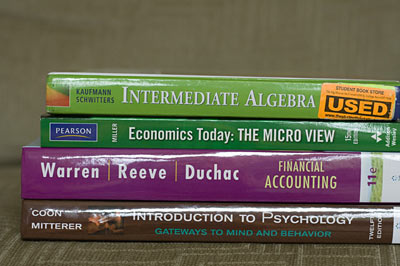
Textbooks in digital form not only cost less, but are easier to carry around. Another benefit: no waiting in lines at the college bookstore. Digital textbooks can be downloaded right from the Internet.
Here is a select list of colleges that are known to be easy to get into, as they have some of the highest acceptance rates in the nation.